Barry Castle
What remains of Barry Castle is only a fraction of what once stood here, although it was never a castle in the sense of a military stronghold. Built on the site of a former Romano-British farmstead, it was a fortified manor house.
Following the Norman Conquest, the area was divided into manors with the Barry area split into two large lordships, Penmark and Dinas Powys. Penmark was split into the sub-manors of Fonmon, West Penmark and Barry. The sub-manor of Barry was granted to Odo, a Norman Knight, who assisted in the Norman Conquest of England during the 11th century. As reward for his military services, Odo was granted estates in Pembrokeshire and around Barry, including Barry Island.
Odo’s grandson, Gerald of Wales (1146-1223), gives the origin of his family’s name, de Barry, in his Itinerarium Cambriae (1191):
“not far from Caerdyf is a small island called Barri, from St Baroc, who formerly lived there, and who’s remains are deposited in a chapel overgrown with ivy…from hence a noble family, of the maritime parts of South Wales, owned this island and the adjoining estates, received the name of de Barri.”
The de Barry family held the manor of Barry under feudal tenure as a sub-manor from their overlords – the de Umfraville family of Penmark – at a fee of one knight. This meant that the resident lord of Barry was obliged to provide his overlord with military service as and when required.
The de Barry family made Barry Castle their home.

We don’t know what the castle’s architecture was at that date but by the late 13th century it had at least two large stone buildings located on the east and west sides of Barry Castle. These are no longer visible above ground but were uncovered during trench digging in 1960 and 1979. The remains we see today date to the early 14th century and consist of a gatehouse adjoined to a hall, the foundations of a south-west tower, and curtain walls to the west, north and east.
The gatehouse is still an impressive structure today. It would have had a drawbridge and portcullis, and two inner doors. Above the gatehouse was a vaulted gate passage with the above room acting as a chapel with a small altar set within the sill of the east window. Directly above the main entrance was a large splayed lancet window (ca.1310-50), of which the left jamb survives, as well as an eroded carved stone head, one of two, possibly depicting a Knight and his Lady.
The hall, of which a section of walling survives, was the largest and grandest building in Barry Castle and formed a part of the south perimeter wall. The hall consisted of two levels. The upper floor acted as the main hall and the lower level served as a cellar or storage basement. The hall’s interior walls would have been rendered and perhaps painted with heraldic emblems, religious scenes or those of everyday life, as can be seen at other castles. Wooden beams resting on stone corbels, some of which survive, carved and painted timberwork, dressed stone, as well as a grand fireplace in the north wall, would have made this a colourful place!


Barry Castle’s decline began when ownership was transferred to the St John’s of Fonmon in 1386. It seems they did not invest in its maintenance. However, it’s likely that plague and famine contributed to this decline. Archaeology of Barry village found not one of the excavated buildings showing evidence of occupation into the latter part of the 14th century or into the 15th century. By the 1530s Barry Castle was in a state of ruin.
Then in the late 16th century it was given a new lease of life when William Wilkyn erected a cottage within the shell of the old hall which doubled as an ale-house. Sailors reaching the Old Harbour would have made the short trip past the medieval church of St Nicholas to the ale-house, for beer and other services. In 1583 Wilkyn was indicted for selling ale without a licence and for keeping prostitutes.
In 1666 Barry Castle was sold by the St John’s to Evan Says and throughout the 17th and 18th centuries the gatehouse was used as a meeting place for manorial courts, which probably helped to keep it in a good state of preservation. Wilkyn’s cottage was pulled down in 1800. More recently, foundations at the south-west corner were destroyed when an air raid shelter was built during the Second World War.


Contemporary dance group from Motion Control Dance at Barry Castle.
With kind thanks to Mark and Jonathan Lambert for sharing their research. You can find out more on their blog.
Also in this section


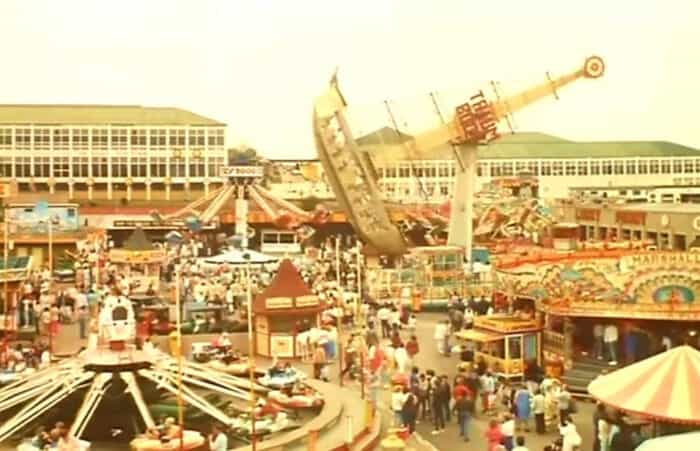
Barry Island – the making of a resort
A potted history of Barry Island that will have you exclaiming "Well I didn't know that!"
Read More
Pirates & the Old Harbour
Barry Island's pirates in the days when it was still a true island.
Read More
Great Barrians – the Influencers!
Barry produced influential people too - another of its great exports!
Read More
David Davies, Wales’s First Tycoon
David Davies, the man who founded the docks and set Barry apart from the rest.
Read More
Chapels in Barry
The golden age of chapel building in Wales coincided with the country's industrial revolution.
Read More
High Street stories
Footfall on High Street, curious customers, shutters are rising, the busied owners prepare for the day.
Read More
Triassic barry
The coastal area known as the Bendricks is one of the most prolific Upper Triassic dinosaur footprint sites in the UK.
Read More
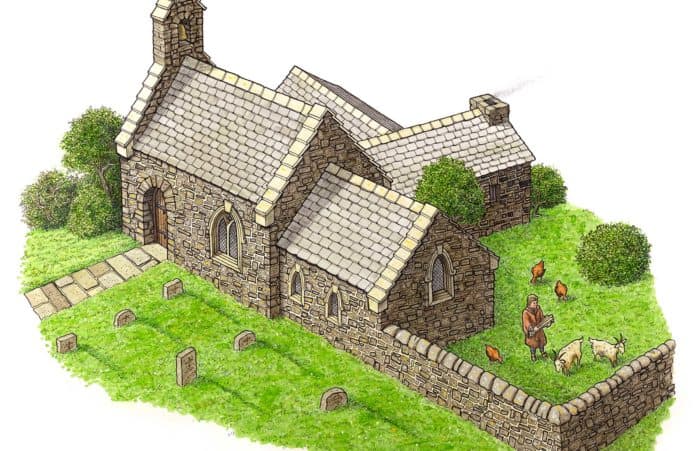
Saint Baruc
The place name Barry Island is believed to be derived from Baruc’s Island, and refers to Saint Baruc’s tragic story.
Read More
The Dock Office
This landmark building stands out on the skyline of Barry, overlooking the docks. It was built between 1897 and 1900 in the Baroque Revival style
Read More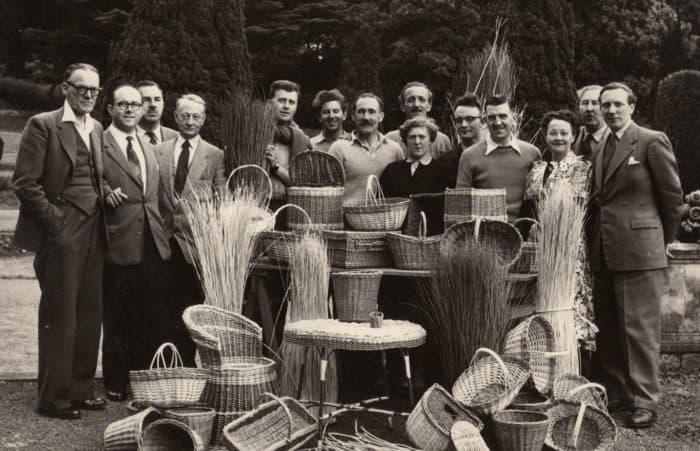
Barry Summer School
During the mid 20th century, The Glamorgan College of Education located in the town, was at the heart of the internationally renowned Barry Summer school.
Read More