Bronze Age Barry
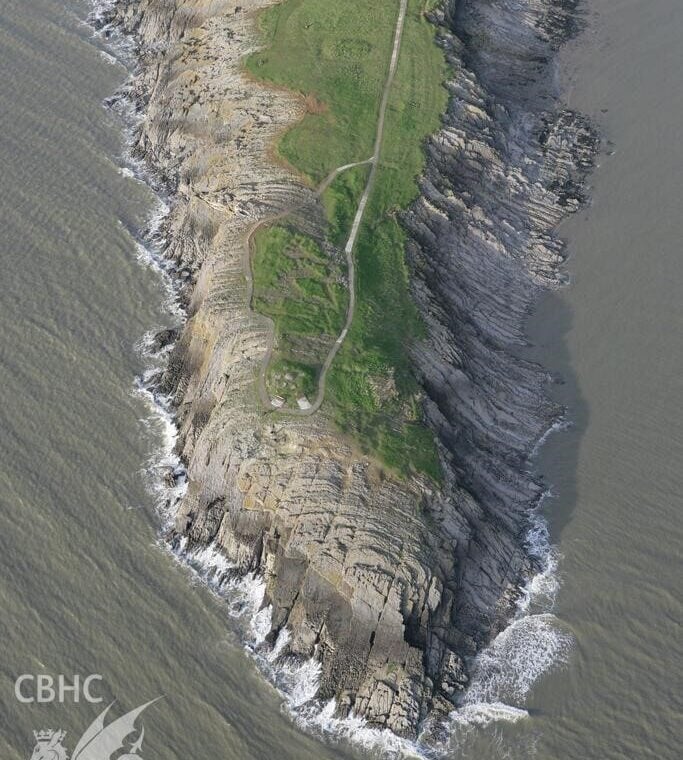
Bronze Age burial mounds and breathtaking sea views await at Friars Point. Only a short, largely accessible walk from the golden sands of Whitmore Bay, it’s easy to see why the builders of Friars Point Cairns chose this magical spot. Discover their fascinating history here…
Much historical evidence points to Friars Point, and Barry Island as a whole, being a sacred place to visit, and to be laid to rest, for many millennia. Variously referred to as ‘Friars Point Cairns’, or the ‘Barry Island Cairns’, Friars Point has been home to a collection of at least seven cairns or burial mounds, where Mesolithic, Neolithic, Iron and Bronze Age artefacts have been found.
Friars Point’s geographical position, reaching out into, and high above the Bristol Channel, makes it visible from great distance, and equally a place of far-reaching views. It was natural progression then, that the point became a place for the building of beacons, perhaps guiding sailors in the treacherous waters, for hundreds if not thousands of years. Some of these beacons were probably built upon the remains of already millennia old burials.
It was no mean feat to build cairns or beacons on this outcrop of turf covered rock, separated as it used to be from the mainland. Prior to the late 19th century, Barry Island was a true tidal island, until construction of Barry Docks, and the causeway which held back the tide.
Those excavations through the 1800s led to finds that included Mesolithic worked flint, stone tools, at least 4 cremation burials, one in an overhanging rim-urn, along with pottery fragments, mollusc shells, and a number of horse teeth. Some findings are recorded in the Archaeologia Cambrensis, available online with the Archaeology Data Service by searching “Friar’s Point”. Upwards of seventy finds are recorded as stored in the National Museums and Galleries of Wales Collection.
The excavations took their toll, unlike today’s world where archaeologists painstakingly restore dug sites, this was not always the case. What you will see now, is various unusual and perceivable undulations. Amongst them, one near the first viewing bench you pass, which appears to have a dip in its centre, and a barely perceptible indentation around its circumference. The other perceptible survivor is at the furthest reach of the point, where a no doubt already excavated burial, later had a flagstaff base built on it.
Also in this section


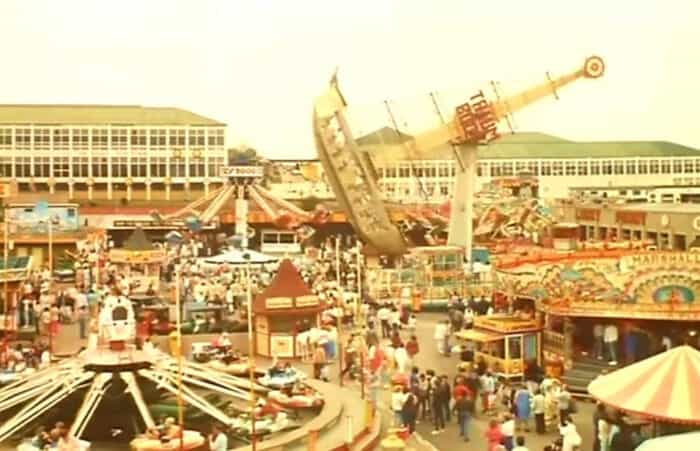
Barry Island – the making of a resort
A potted history of Barry Island that will have you exclaiming "Well I didn't know that!"
Read More
Pirates & the Old Harbour
Barry Island's pirates in the days when it was still a true island.
Read More

Great Barrians – the Influencers!
Barry produced influential people too - another of its great exports!
Read More
David Davies, Wales’s First Tycoon
David Davies, the man who founded the docks and set Barry apart from the rest.
Read More
Chapels in Barry
The golden age of chapel building in Wales coincided with the country's industrial revolution.
Read More
High Street stories
Footfall on High Street, curious customers, shutters are rising, the busied owners prepare for the day.
Read More
Triassic barry
The coastal area known as the Bendricks is one of the most prolific Upper Triassic dinosaur footprint sites in the UK.
Read More
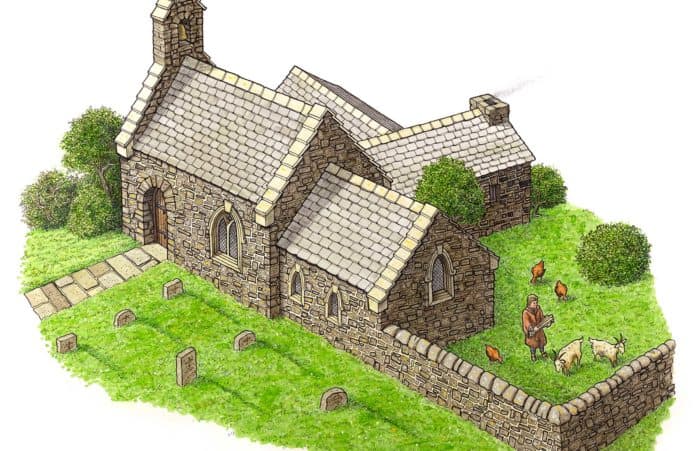
Saint Baruc
The place name Barry Island is believed to be derived from Baruc’s Island, and refers to Saint Baruc’s tragic story.
Read More
The Dock Office
This landmark building stands out on the skyline of Barry, overlooking the docks. It was built between 1897 and 1900 in the Baroque Revival style
Read More
Barry Summer School
During the mid 20th century, The Glamorgan College of Education located in the town, was at the heart of the internationally renowned Barry Summer school.
Read More