Barry Island – the making of a resort
From pilgrims visiting the burial place of St Baruc, to fans visiting shooting locations of ‘Gavin and Stacy’, the Island's popularity spans hundreds of years. But what made Barry Island a seaside resort?
A remote wilderness
By the early 1700s, industry was transforming the land, and with the belief in the health benefits of sea air and sea bathing, coastal tourism increased. Remote areas of Britain were considered too wild and inhospitable to visit, as well as difficult to access by horse or buggy. The aristocracy tended to travel to the continent for health and pleasure. But wars with France stopped travel to the continent for a period and the wealthy began to explore remote areas of Britain instead. By the 1790s, a mostly uninhabited Barry Island attracted rich and aristocratic visitors who preferred its wild location and gently sloping sandy beaches.
Accommodation could be found at the single farm lodging house on the Island, or in rooms or cottages in nearby Cadoxton village. By 1840, accommodation providers in Cadoxton were advertising in regional newspapers. Cottages to rent with ‘splendid views over the Bristol Channel’ and promises of air so pure that villagers lived to ‘great ages of over eighty years’!
By the early 1800s steamboat excursions from Bristol anchored off Barry Island, where middle-class pleasure seekers were ferried to shore by row-boat.
The railway comes to Barry Island
In the 1870s, the Island attracted development, and the Marine Hotel opened. For a time though, the owner of the Island, Lord Windsor, banned visitors and developers. In the 1880s, he struck a deal with Rhondda coal mine owners led by David Davies, to build a coal export dock in Barry Sound, with new rail links. A 19 mile railway was built linking Trehafod in the Rhondda to Barry, and a new road across Cadoxton moors took a couple of miles off the journey from Cardiff. However, this was too busy with dock construction traffic, and the rail line was initially reserved for coal transport. It was the new rail line from Cogan that brought day-trippers to Barry again. In 1896 the railway was extended to Barry Island Station. Never formally lifted, Lord Windsor’s ban was now ignored!
A half-penny promenade was constructed during the Edwardian era. At Friar’s Point there was a bathing pool for women with bathing huts just above. Men’s bathing facilities were at the opposite end at Nell’s Point, close to today’s colourful beach huts.
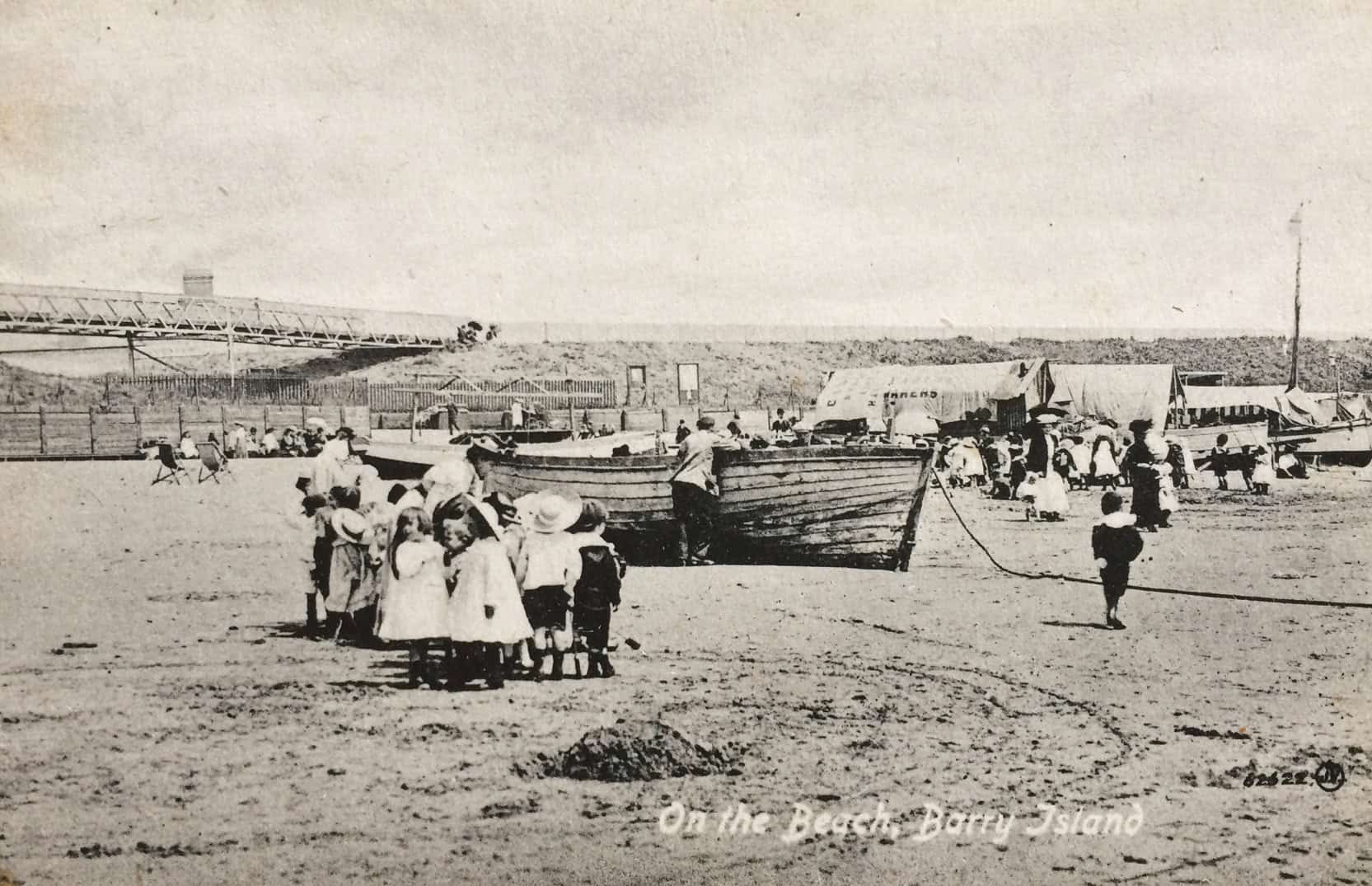


A steady flow of visitors becomes a torrent!
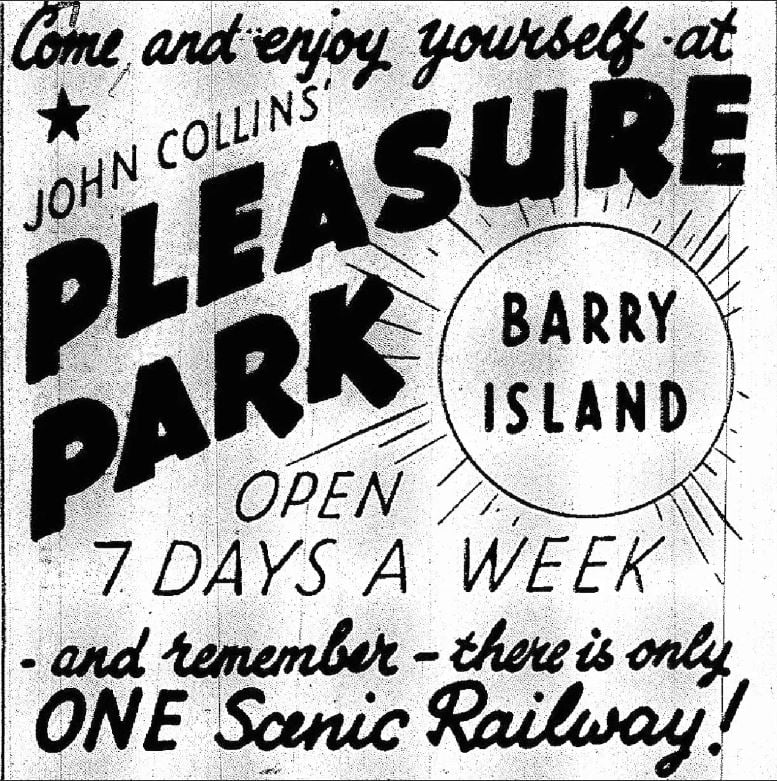
However, it took a long while before Barry Island was developed as the resort we see today. Lord Windsor blocked significant development, only making small concessions to improving basic amenities. But by the 1910s and 1920s major developments included Whitmore Bay’s impressive sea wall and promenade. Also the scenic railway roller coaster that laid the ground for the funfair, the ‘Wall of Death’ and other attractions. The Western and Eastern Shelters, built in Classical style, date from this period and initially offered shelter and changing facilities for bathers.
The resort boomed, and by 1934 the fairground is said to have had in excess of 400,000 visitors during the August Bank Holiday week. In 1938, just one Bank Holiday Monday saw an astonishing 250,000 visitors.
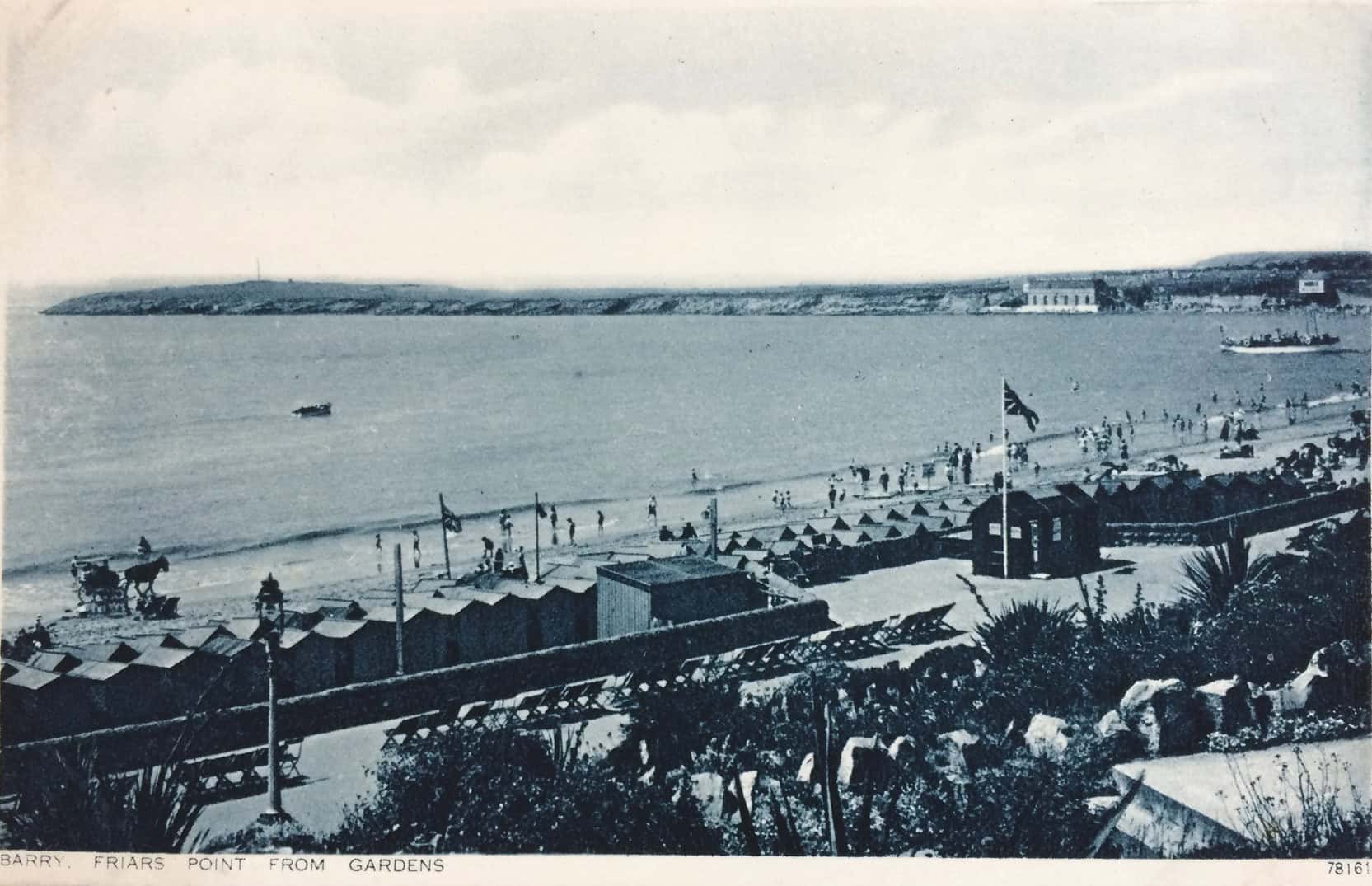
The postcard below shows how the Western Shelter was originally built; the staircase leading directly down to the beach was added later.



Butlin’s
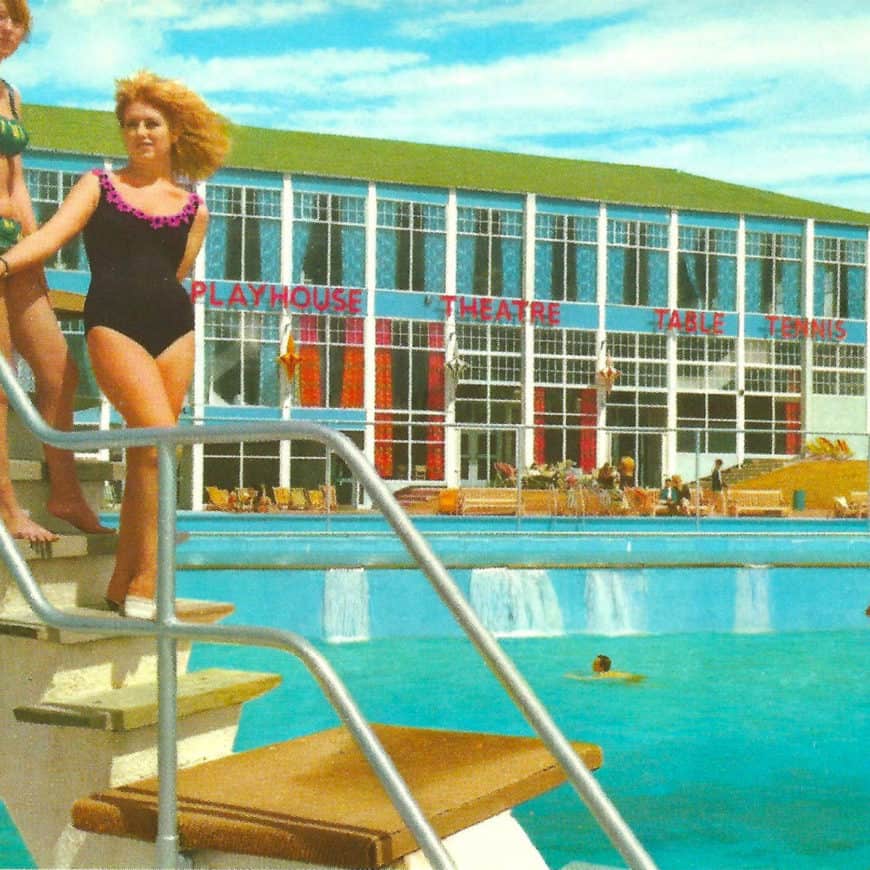
With the exception of the war years, the resort continued to grow. Butlin’s Barry Island opened in 1966 heralding thirty years of long-staying revellers. The camp had 800 chalets, and contained all the usual Butlin’s activities – chairlifts, Pig and Whistle Showbar, arcades of shops, large swimming pool and tennis courts. It became ‘The Barry Island Resort’ in the late 1980s after Butlin’s sold the camp to Majestic Holidays. The camp closed in 1996.
For more information about the history of Barry Islands see:
The unknown history of Barry Island | University of South Wales

Information
Bank Holiday Bonanza!
1934 August Bank Holiday week saw 1,200 coaches and charabancs, 8,000 motor cars, 3,000 motor cycles and over 10,000 bicycles pay for parking or garaging. Rail and public buses brought tens of thousands more. The 1938 Bank Holiday Monday saw cars, buses and motor cyclists diverted by police to car parks at the Knap, Porthkerry, and even Sully and Rhoose when all parking at the Island had been exhausted. By 6pm, a continuous, crawling line of traffic stretched from Barry to Culverhouse Cross. This didn’t clear until well after 3am on Tuesday morning.
Video
Butlin's
It’s rumoured that Billy’s inspiration for a camp came from a holiday in Barry in his youth. Staying in a bed and breakfast, he was locked out of his room all day by the landlady! Locals still reminisce about the Butlin’s years being Barry Island’s hey day. Sadly, the arrival of cheap air flights and package holidays for the masses was a major factor in Butlin’s eventual demise.
Click on the arrow to see a family holiday film from Butlins in 1971.
Also in this section


Pirates & the Old Harbour
Barry Island's pirates in the days when it was still a true island.
Read More

Great Barrians – the Influencers!
Barry produced influential people too - another of its great exports!
Read More
David Davies, Wales’s First Tycoon
David Davies, the man who founded the docks and set Barry apart from the rest.
Read More
Chapels in Barry
The golden age of chapel building in Wales coincided with the country's industrial revolution.
Read More
High Street stories
Footfall on High Street, curious customers, shutters are rising, the busied owners prepare for the day.
Read More
Triassic barry
The coastal area known as the Bendricks is one of the most prolific Upper Triassic dinosaur footprint sites in the UK.
Read More
Saint Baruc
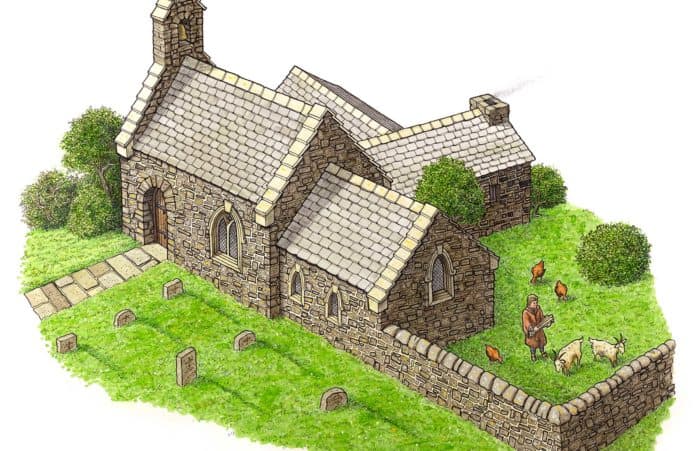
The place name Barry Island is believed to be derived from Baruc’s Island, and refers to Saint Baruc’s tragic story.
Read More
The Dock Office
This landmark building stands out on the skyline of Barry, overlooking the docks. It was built between 1897 and 1900 in the Baroque Revival style
Read More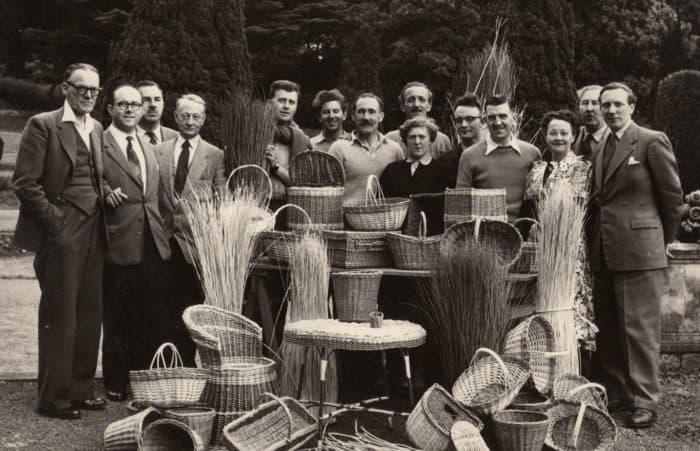
Barry Summer School
During the mid 20th century, The Glamorgan College of Education located in the town, was at the heart of the internationally renowned Barry Summer school.
Read More