The Barry Railway
In 1883 David Davies and coal owners in the Rhondda wanted an alternative to the congestion, delays and ‘extortionate’ fees charged by Cardiff Dock. The Barry Dock and Railway Company was born. Their story is a remarkable one.
Acts of Parliament
In 1884, with tough opposition and on the second attempt, the Barry Dock and Railway Company Act was passed. This opened the way for a new dock at Barry, and a rail link to the Rhondda, relieving congestion and a practical monopoly charging ‘extortionate’ fees to export from Cardiff.
Dock construction began in November 1884, along with 27 miles of new railway and sidings, linking Barry to Trehafod, Rhondda. Thousands of navvies arrived, and Barry town exploded out of what was previously only a tiny hamlet. Rapid growth and poor sanitation led to a ‘lawless and unsanitary place’. Barry was likened to a frontier town of the American West.
The dock opened in 1889, the railway the same day, reserved for coal and freight. The previous December, a light freight and passenger line was laid from Cogan to Barry. In 1891, Barry Railway changed its name to The Barry Railway Company, losing the word ‘dock’ which had seen shares placed in a disadvantageous category.
The first dock was immediately successful, and 1893 saw a further act passed to build a second.
In 1896, Barry Island Station opened. Later, the line was extended to Barry Pier by tunnelling through the Island. Located between the breakwaters of the outer tidal basin, the pier served steamboat passengers. The ‘Great Civiliser’ as the railways had become known, had arrived. Sanitation and roads improved, and the cleansing of Barry’s unsanitary and lawless reputation began.
Further Taff and Vale concessions allowed Barry Railway to operate passenger trains from Porth in the Rhondda via the new line. Having previously been reserved for minerals only, new passenger stations were required, at Wenvoe, Creigiau, Efail Isaf, Treforest and Pontypridd. And so began a steady increase of seasonal visitors to Barry Island from the valleys.


New lines
The Vale of Glamorgan Railway Act of 1889 called for a new line between Barry and Coity, Bridgend, for coal owners in the Llynvi, Garw and Ogmore Valleys, limited by shipping capacities at Porthcawl. This was run by Barry Railway and opened in December 1897.
The new Bridgend line included the viaduct at Porthkerry, which suffered subsidence in early 1898 and had to be bypassed while it was secured. The viaduct was finally reopened in Jan 1900. More concessions and new lines followed allowing Barry Railway to serve parts of the wider valleys. They also operated on the St Fagans to Cardiff line. But passenger traffic to Barry Island from the valleys was of course seasonal.

Porthkerry viaduct
Woodham’s scrapyard
After World War I, government plans heralded the end of the Barry Railway Company. The Railways Act of 1921 forced the railways to restructure in what was called the “grouping”. Barry Railway Company was incorporated into the new Great Western Railway group, along with the original GWR and others.
Modernisation and the 1957 Beeching Report resulted in 650,000 wagons and 16,000 steam locomotives being scrapped. British Railways couldn’t scrap them fast enough and Woodham’s of Barry began purchasing these wagons and locomotives through tender. They were stored in huge numbers at the oil terminal, and sidings built on reclaimed land where the docks West Pond had been. By August 1968 Dai Woodham had purchased 297 locomotives, of which 217 then remained at the Barry scrapyard. Although he scrapped the wagons, he sold most of the engines to steam locomotive enthusiasts. By 1989, Dai had sold more than 200 steam locomotives at scrap metal value, for preservation. The collection of engines was affectionately known as the ‘train graveyard’ and the Barry Tourist Railway took on several of the last remaining engines when the site was cleared.
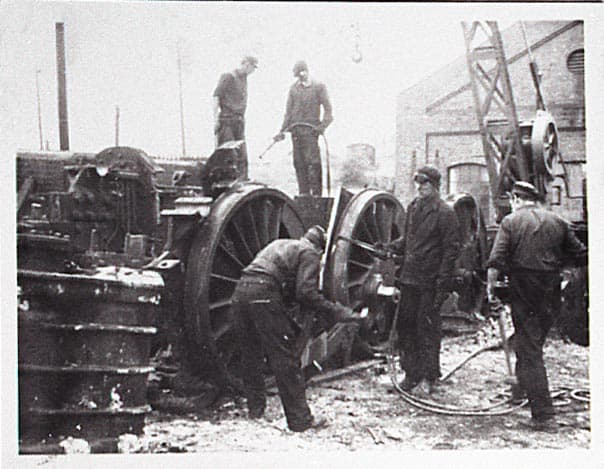
Woodham's scrapyard

Information
The Red Funnel Line
Barry Railway diversified into the steamboat pleasure business between 1904 and 1910. The 1904 Barry Railway (Steam Vessels) Act, allowed Barry Railway subsidiary, Barry & Bristol Channel Steamship Company, to trade as The Red Funnel Line. From 1905, newly built Gwalia, Devonia, Westonia and paddle-steamer Barry, visited Burnham-on-Sea, Weston-super-Mare, Minehead and Ilfracombe. 191,000 passengers boarded that year. Another venture, the Ilfracombe Boat Express, operated from Cardiff Riverside and non-stop from Cardiff General GWR station to Barry. Even those high numbers of passengers didn’t make the ventures profitable, and by 1910 the vessels were sold on, at a substantial loss on the cost to build them.

Information
From Woodham's to Hogwart's
One of the engines rescued from Woodham’s, and arguably the most famous, is GWR 4900 Class No. 5972 Olton Hall. Rescued in 1981, restored in 1998, and a pop culture icon in the 2000s for being a part of the Harry Potter films. When filmed, Olton Hall carried a “Hogwarts Express” headboard on the smokebox, featuring the Hogwarts school crest. The same emblem is featured as part of the “Hogwarts Railways” sigil on the tender and carriages. It retained its GWR number of 5972, but with alternative nameplates fitted, naming the engine Hogwarts Castle. The renaming as “…Castle” has become a railway preservation joke: “…the Hall that thinks it’s a Castle.” The Great Western Railway Castle Class engines were larger, faster locomotives designed for prestigious express passenger duties; whereas the Halls were a mixed-traffic design.
Also in this section


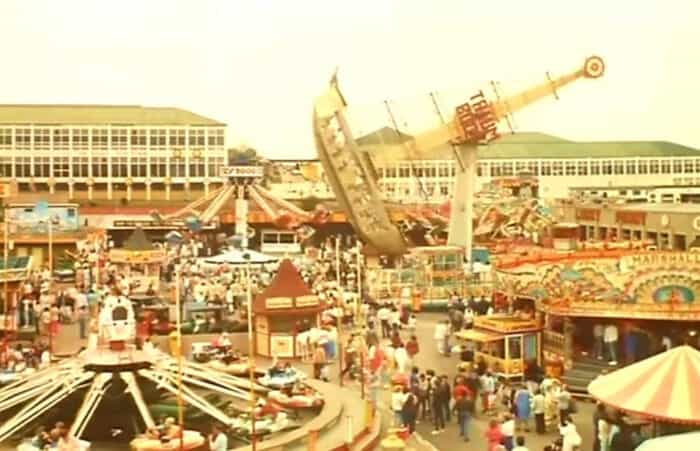
Barry Island – the making of a resort
A potted history of Barry Island that will have you exclaiming "Well I didn't know that!"
Read More
Pirates & the Old Harbour
Barry Island's pirates in the days when it was still a true island.
Read More

Great Barrians – the Influencers!
Barry produced influential people too - another of its great exports!
Read More
David Davies, Wales’s First Tycoon
David Davies, the man who founded the docks and set Barry apart from the rest.
Read More
Chapels in Barry
The golden age of chapel building in Wales coincided with the country's industrial revolution.
Read More
High Street stories
Footfall on High Street, curious customers, shutters are rising, the busied owners prepare for the day.
Read More
Triassic barry
The coastal area known as the Bendricks is one of the most prolific Upper Triassic dinosaur footprint sites in the UK.
Read More
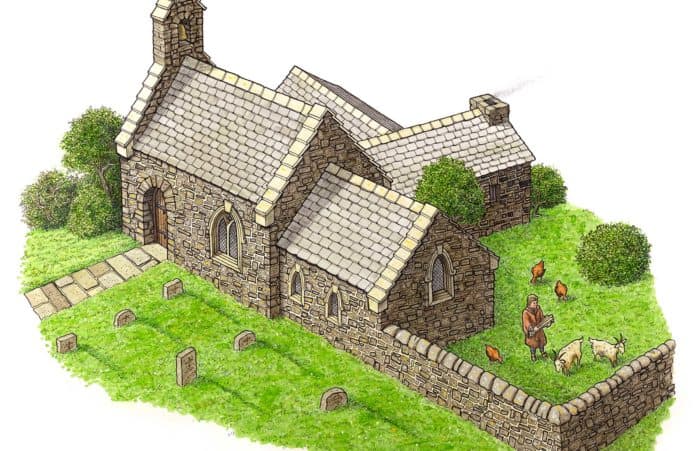
Saint Baruc
The place name Barry Island is believed to be derived from Baruc’s Island, and refers to Saint Baruc’s tragic story.
Read More
The Dock Office
This landmark building stands out on the skyline of Barry, overlooking the docks. It was built between 1897 and 1900 in the Baroque Revival style
Read More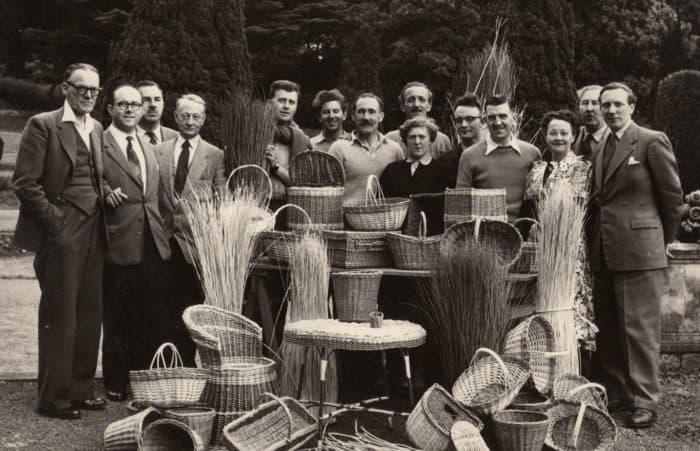
Barry Summer School
During the mid 20th century, The Glamorgan College of Education located in the town, was at the heart of the internationally renowned Barry Summer school.
Read More